
Your fortnightly bulletin on veterinary policy developments
1. The Headline
Bluetongue - current situation

→ Cases of bluetongue have now surpassed 1000 in the UK.
→ The topic has been receiving attention in both the Commons and Lords chambers, including the following question from Robbie Moore MP on 3rd September 2026: ‘To ask the Secretary of State for Environment, Food and Rural Affairs if she will make a statement on bluetongue virus in livestock.’
→ The subsequent statement drew heavily on the importance of vaccination as the main tool for control, however supplementary oral questions drew attention to potential lack of vaccine supplies and testing capacity. This included concerns raised by vet Dr Danny Chambers MP over the classification of bluetongue under the specified animal pathogens order ‘slowing down the diagnosis of bluetongue, [and meaning] we cannot test for other causes of abortion that farmers regularly need to test for’.
2. Other items of interest
A Sustainable Veterinary Workforce: Government Response
On 11th September 2026, the government and CMA response to a report originally published by the Environment, Food and Rural Affairs Committee on 5th June 2026 was published.
In their response, the government disagree with many of the recommendations, including that a sector-wide review of retention in the vet sector is required and with the proposed need to review the Skilled Worker Visa salary thresholds for vet roles.
The government disagree that a review of funding for veterinary education is needed, or that sector-wide guidance on contextual admissions to university is needed.
The government agree on aligning VSA reform with CMA recommendations to avoid duplication. However, the government do not agree with the recommendation to split the RCVS to move regulatory function elsewhere, highlighting that this was not the preference from consultation responses.
The CMA response mainly detailed the process of their market investigation to give assurance that due account was taken of small and rural veterinary businesses.
Exports from Brazil
On 3rd September, 2026, the EU removed Brazil from the list of countries authorised to export Products of Animal Origin (POAO), which includes all beef and poultry meat, to the bloc due to public health concerns linked to antimicrobial resistance.
The ban came following Brazil’s inability to demonstrate they weren’t using critically important antibiotics for human health or growth promoters.
This has led to calls for the UK to follow suit or risk putting consumer confidence at risk, and perhaps meaning they stop buying beef and poultry meat.
It has also raised key questions about our testing capacity at UK borders - the NFU reported that: ‘of 114,442 tonnes in the 2023-2024 testing period only 94 samples of Brazilian POAO underwent testing for veterinary medicinal
product residues. No AMR monitoring was recorded.’
Back British Farming day
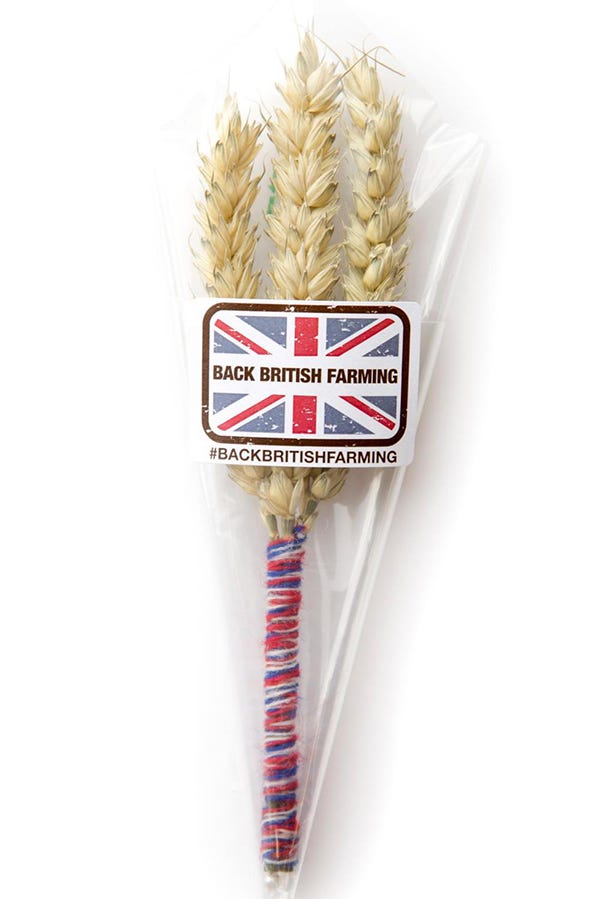
11th September 2026 was the 11th Back British Farming Day.
It was celebrated with a Parliamentary reception where the NFU launched their ‘Ready to Grow’ report: https://www.nfuonline.com/media/3d5dk2zk/ready-to-grow-unlocking-report-2026.pdf
NFU President Tom Bradshaw highlighted in his address how this summer had been one of the toughest on record for British farmers, faced with drought, international conflict raising fuel prices and disease threats, to highlight how now more than ever we need to invest in agriculture.
Prime Minister Andy Burnham acknowledged the importance of the occasion later that day in PMQs, stating ‘Food security is national security and we will continue to back British farming as a govenment.’
3. In focus: dealing with a ‘Dunkelflaute’
Lord Trees is the only vet in the House of Lords, and also a member of the Environment and Climate Change Committee, who have recently launched their next inquiry. This will look at how we can maintain a consistent power supply from low-carbon sources during still, dark periods - when we cannot rely on wind and solar as renewable energy sources.
These ‘Dunkelflaute’ events can last days to weeks, often resulting from persistent cloud cover in winter months coupled with low wind speeds. The low temperatures of such cloudy, winter days means that energy demand often increases alongside decreases in supply from renewables. With the Labour Party manifesto promise of ‘Clean Power in 2030’ setting a target for close to 100% clean energy generation by that time, and the UK’s net zero by 2050 targets, finding a way to deal with energy intermittency from these clean power sources is crucial.
Possible solutions to this issue include energy-storage solutions, such as large-scale battery storage (currently only viable for storage over hours/days, not weeks), hydrogen storage from water undergoing electrolysis with long-term storage possible in underground salt caverns and pumped hydro systems. Hydrogen storage seems to be the most viable long-term solution, however building the facilities could take 7-10 years.
Other solutions include low carbon dispatchable power such as hydrogen-to-power, gas power with carbon capture or small nuclear reactors, however these technologies do not have the benefit of energy storage during times of excess. Importantly, alongside these technologies, demand-side management plays a key role, matching energy consumption to supply as far as possible using incentives and smart meters. International grid connectors also remain important, although we cannot be too reliant on energy supply from other countries to plug intermittency gaps.
The House of Lords committee inquiry will involve four evidence sessions from expert witnesses and result in the production of a report. Follow the process here: https://committees.parliament.uk/work/9956/dunkelflaute-and-the-risks-of-electricity-intermittency/?fromfind=true
4. Coming up
In the Lords: Thursday 17th September - Earl Russell to ask His Majesty's Government what assessment they have made of the implications of climate-related extreme weather for the resilience of the UK’s food supply.
The next stage of the CMA inquiry - placing Orders on businesses to enact their remedies - must be in place by 23 September 2026.
It’s disappointing the Government doesn’t appear very interested in the training and retention of vets? Veterinary work is key in so many areas, including disease control, food hygiene standards and biodiversity. Dogs, cats, horses and hamsters matter too. So much could be done to improve the experiences of young vets, and ensure they use their expensive training to the max.